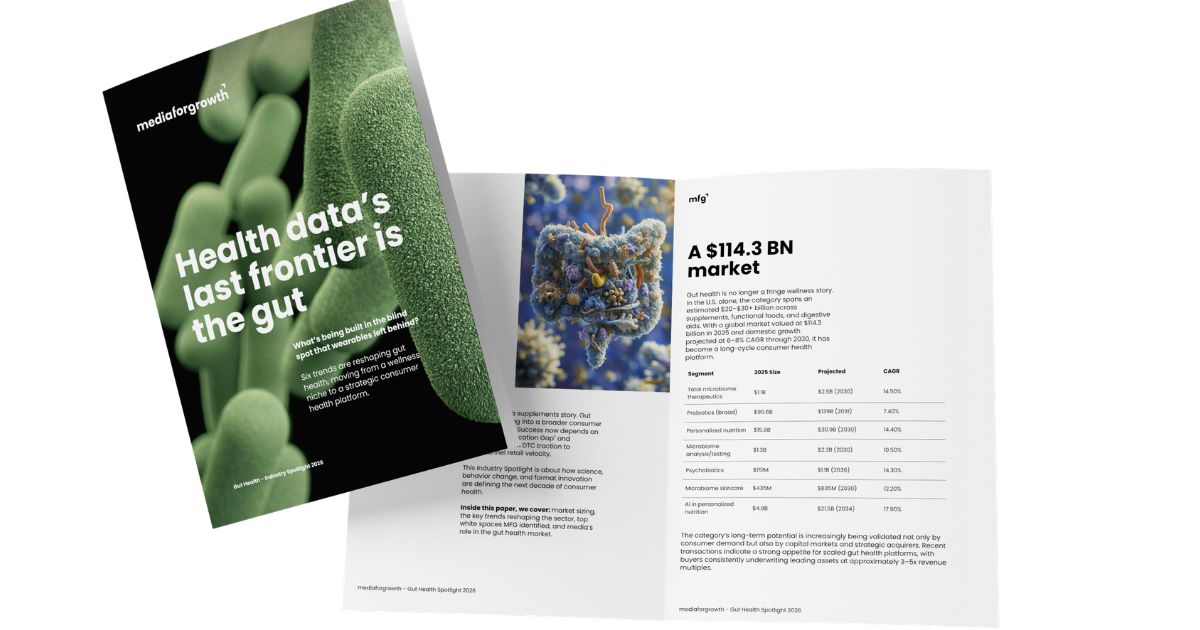
Your Gut Is the Last Frontier of Health Data

In 2026, you can track your sleep to the minute, your heart rate continuously, and your blood oxygen in real time. One in six Americans checks a health wearable every single day. We have built a remarkable instrument panel for the human body. But left one critical system completely dark.
The U.S. gut health market generates an estimated $15.8 billion annually. And yet it has no tool that tells you, daily, whether any of it is working.
That gap is not a footnote. The gut influences your immune function, metabolism, mood, and long-term disease risk. It is the most consequential white space in consumer health right now.
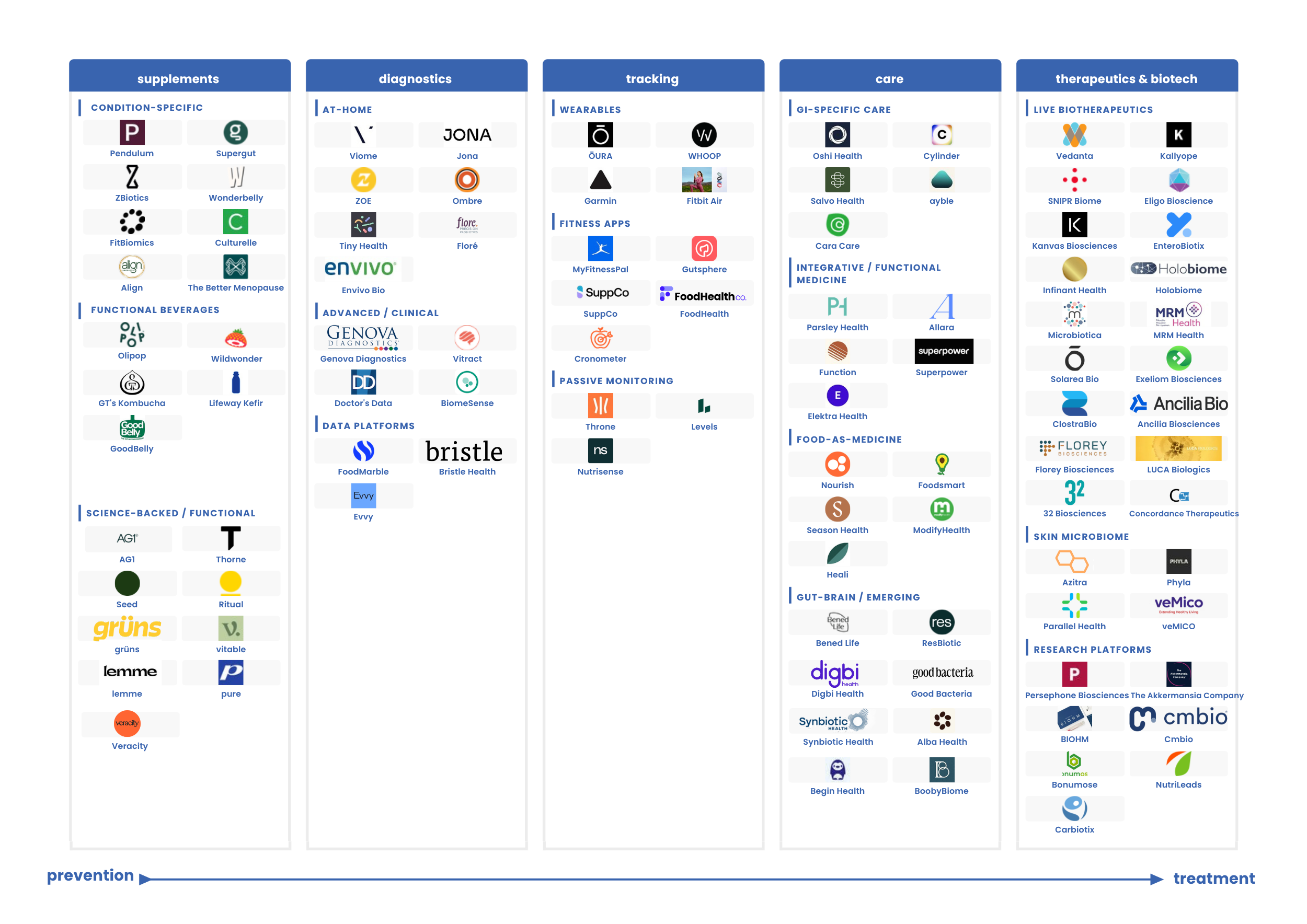
MFGScape: The Gut Health Frontier
The Category That Won Without the Dashboard
The gut health category is booming. PepsiCo acquired Poppi for $1.95B in 2025, Coca-Cola launched its first prebiotic soda, and Olipop scaled from under $1M in 2019 to roughly $500M in 2025. Meanwhile, science-led brands like Seed Health, Pendulum Therapeutics, and Supergut built hundred-million-dollar businesses on clinical validation. The GLP-1 wave created an entirely new layer of demand.
And through all of it, 84% of Americans say they care about gut health, while the majority have no way of knowing whether anything they're doing is working. The category sells products. It does not yet produce daily, continuous, usable data.
Through our work at MFG, where we speak with hundreds of growth-stage consumer founders every year, one pattern comes up consistently: the most durable companies tend to build daily feedback loops that give consumers a reason to come back.

In gut health, that loop is still largely missing, and some of the more interesting founders in the space are starting to focus on building it.
Throne, for example, is approaching gut health through passive data collection. Their device clips onto a standard toilet and uses computer vision to track stool patterns and hydration, generating a daily gut health score without requiring any behavior change. The premise is simple: make gut data as ambient and continuous as wearable data.
Tiny Health is taking a more clinical route. Built around infant microbiome testing, the company focuses on early-life data using age-specific benchmarks rather than adult references. Their work highlights how precision, not just access, may be critical in making gut health insights actionable.
The Instrument Is Being Built
Both Throne and Tiny Health operate in the one part of gut health that has had no Poppi moment yet, no scale exit, no institutional validation at the consumer level. That will change. The same consumers who paid $499 for an early WHOOP are already pre-ordering Throne. The same parents who drove 40% of American children to a chronic condition diagnosis are ordering Tiny Health tests because no one else gave them an answer.
Despite rising awareness, multiple sources suggest a meaningful education gap in gut health: a 2025 U.S. Ipsos survey found only 51% of Americans had heard of the ‘gut microbiome’ and just 27% said they knew exactly what it means. The good news is that research shows that when consumers are given clear, accessible information about how biotics work, nearly 30% of non-users express interest in trying them, a direct line between education and category growth.
The gut health category is now beginning to produce its second generation of winners, and they look more like health platforms than traditional CPG brands. Data-connected and built around the feedback loop that the industry has been missing. From my vantage point at MFG, this shift matters. As these brands mature, the challenge won’t just be building the product. It will be scaling awareness and trust at a level that matches the sophistication of what they’ve built.
The original article is a featured article in Fast Company.


.JPG)